Irvine Residential HVAC Guides · Need Help Now?
Emergency HVAC Problems: Irvine Homeowner Guides
Sudden breakdowns, electrical faults, leaks, burning smells, and urgent decisions. Learn what to do first, which warning signs require an emergency response, and how to prepare for an HVAC service visit in Irvine.
Published By Irvine HVAC Directory · Updated October 3, 2026
What Counts As An HVAC Emergency In Irvine?
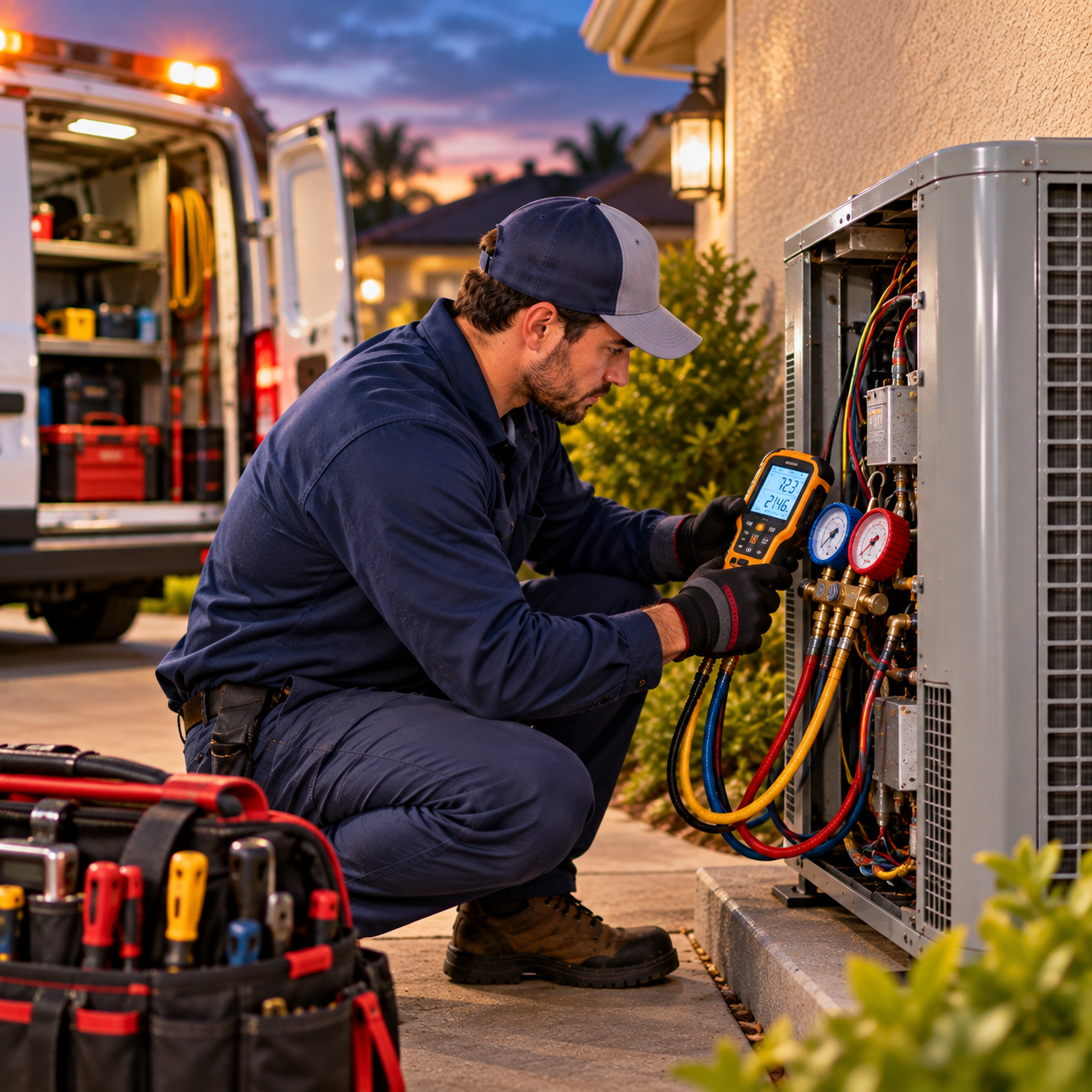
An HVAC emergency is a heating or cooling problem that puts people at risk, creates a suspected fire or gas hazard, or threatens immediate property damage. A system that stops cooling also needs urgent attention when the home cannot stay safely comfortable. The right first step depends on the warning signs and the people in the home, rather than simply whether the equipment has stopped running.
This guide explains how to respond to common emergency HVAC problems in Irvine, what observations are useful to a service company, and where to find more detailed homeowner articles. It is a guide to making safer decisions and arranging help, rather than a repair manual. Do not open equipment cabinets, handle refrigerant, test gas components, or attempt electrical repairs.
Choose The Right First Response
| What You Notice | First Response |
|---|---|
| Smoke, flames, or a smoke alarm | Leave, stay outside, and call 911 from safety. |
| A suspected natural gas leak | Evacuate immediately without operating switches; contact SoCalGas from a safe location. |
| A carbon monoxide alarm | Get everyone outside to fresh air and call 911. |
| Persistent electrical burning odor, sparks, or repeated breaker trips | Stop using the equipment and arrange qualified assessment; do not keep restarting it. If smoke or fire develops, evacuate. |
| Water leaking near wiring or through a ceiling | Keep clear of the affected area and arrange urgent professional help. |
| No cooling during dangerous indoor heat | Prioritize a cooler location for occupants, then arrange service. Medical warning signs require emergency care. |
| No cooling, but everyone is safe and the home is comfortable | Make the limited checks below and ask a service company about the next available appointment. |
These are starting points, not a diagnosis. When you cannot determine whether the situation is safe, seek help rather than investigating equipment yourself.
Common Emergency HVAC Problems And What To Do
A Gas Smell Near The Furnace Or Inside The Home
A suspected gas leak calls for immediate evacuation. Do not switch lights, appliances, or the thermostat on or off, use flames, or try to locate or repair the leak. From a safe location, call SoCalGas at 1-800-427-2200. SoCalGas advises calling 911 promptly from safety if the suspected leak may endanger people or property, or you cannot reach the utility. Its natural gas leak instructions explain the response.
An appointment with a heating contractor comes after the immediate hazard has been handled. Tell the contractor what the utility or emergency responders instructed, and do not restart equipment until the appropriate professionals say it is safe.
A Carbon Monoxide Alarm Or Suspected Exposure
Carbon monoxide is invisible and has no smell, so the absence of an odor does not establish safety. If a CO alarm sounds, get everyone outside to fresh air and call 911. Do not reenter until emergency responders give the all-clear. Headache, dizziness, weakness, nausea, or confusion can be signs of exposure; do not remain inside to investigate the furnace. See the CPSC carbon monoxide information and Kidde alarm response instructions.
After the emergency response, keep the incident separate from a routine furnace service request. Explain that there was an alarm or suspected exposure and share any instructions left by responders. Our article Can A Furnace Leak Carbon Monoxide? provides additional background for a later service conversation.
Smoke, Sparks, Or A Burning Odor
For visible smoke, flames, or a smoke alarm, leave the home and call 911 from safety. The U.S. Fire Administration emphasizes getting out immediately when you see smoke. Do not stay beside the system to record a video or try another restart.
If there is an unexplained burning odor without smoke or an immediate evacuation situation, stop using the system. Use the thermostat only if it is safely accessible away from the affected area and there is no suspected gas leak. Arrange professional assessment before using the equipment again. Describe whether the smell was electrical, plastic-like, or otherwise unusual, but avoid assuming that a smell proves a particular component failed.
The HVAC Breaker Trips Repeatedly
A repeated shutdown is a reason to leave the system off and have it assessed. Do not repeatedly reset a breaker, replace a fuse with a larger one, or bypass a protective device to keep the AC running. A service company needs to evaluate the fault rather than work from an assumed diagnosis over the phone.
Useful information includes whether the problem happens immediately at startup or after the system has run, and whether other household equipment also lost power. Report observations you already have; do not create another trip deliberately. If there are signs of overheating, smoke, or damaged wiring, keep clear and treat the situation according to the danger signs above.
The Air Conditioner Stops During Hot Weather
Decide whether people can remain safely comfortable while waiting for service. During a hot-weather outage, the CDC recommends seeking an air-conditioned place. Arrange a cooler location rather than relying on an uncertain repair arrival time. If someone develops confusion, slurred speech, or loss of consciousness in the heat, call 911; these are among the serious warning signs described in CDC heat illness guidance.
Once occupants are safe, tell the service company whether the thermostat is blank, the system is running without cooling, or nothing starts at all. Note whether the outage affects the entire home. If Southern California Edison supplies your home, its outage center can help you check utility information before assuming the HVAC equipment alone has failed.
Water Leaks Around The Indoor Unit
Water on the floor, water around an indoor HVAC cabinet, and water coming through a ceiling deserve prompt attention. Stay away from wet electrical equipment and avoid standing under a visibly sagging ceiling. Do not open a cabinet or climb into an attic to trace the source. If the thermostat is safely accessible, with no gas or fire danger, stop operation and describe the leak to a professional.
Tell the company where the water is visible, whether it is continuing to spread, and whether it started while cooling was running. A safe photo from an accessible location may help explain the situation. The location of a puddle alone does not establish that a drain line, coil, plumbing fixture, or roof is responsible; identifying the source is part of the assessment.
Ice Appears On The AC Equipment
If ice is visible on your air conditioner or refrigerant line without opening equipment, stop cooling at a safely accessible thermostat and contact an HVAC professional. Trane advises turning a frozen AC system off and warns against chipping away the ice. Do not apply a torch, heat gun, or tools to the coil, and do not attempt to add refrigerant.
Explain whether you noticed weak airflow, warm air, or water before seeing the ice. Do not assume that thawing the ice has corrected the underlying problem. Ask the technician what caused it and what must be addressed before normal operation resumes.
The Furnace Stops Heating Or Makes An Unusual Noise
A furnace that does not heat may call for an urgent appointment, but the immediate decision still depends on indoor conditions and warning signs. Gas odor, smoke, or a CO alarm requires the emergency response already described. If there are no danger signs, tell the heating company whether the thermostat is calling for heat and what the system does next.
For a new grinding, scraping, or unusually loud mechanical noise, stop operation and request assessment rather than continuing to test the sound. Record the sequence from memory: a click, a brief start, then shutdown is more useful than simply saying “it is broken.” Avoid taking panels off, reaching into a fan, or testing ignition components. A description can guide the appointment, but it cannot replace an on-site diagnosis.
Safe Checks When There Are No Danger Signs
Use this checklist only when everyone is safe and there is no suspected gas leak, smoke, CO alarm, electrical hazard, or unsafe indoor temperature. It is intended to collect information, not to push a failing system back into service.
- Read the thermostat display. Note the selected mode, set temperature, room temperature, and any error message. Follow the owner’s instructions for ordinary thermostat use; avoid repeated restart attempts.
- Check the scope of the outage. Are ordinary lights and other household appliances also without power? Consult the utility’s outage information when appropriate, without opening electrical equipment.
- Look for obvious airflow obstructions. Note furniture or belongings blocking accessible supply or return vents. Do not disassemble ductwork or reach inside equipment.
- Check routine filter information. If your manufacturer describes a safely accessible homeowner filter location, note its condition and replacement date. Do not remove a service panel to find it.
- Gather records. Have recent service paperwork, warranty information, and the model number from existing records ready. Do not climb onto a roof or enter an unsafe attic to read a label.
If a warning sign appears during these checks, stop. The emergency response takes priority over completing a checklist. A contractor can obtain missing equipment details safely during the visit.
What To Tell An Emergency HVAC Company
Start with the immediate problem: “The AC stopped cooling at 3 p.m., the thermostat still has power, and we have moved the family to a cooler location.” Then explain any danger signs and whether emergency responders or the gas utility have already been involved. This helps the company understand the request without suggesting that you have diagnosed the cause.
Provide your Irvine address, equipment type if known, when the problem started, and what the system was doing beforehand. Mention access issues such as a gated community, parking restrictions, a locked equipment area, or a rooftop unit. Share whether the property is rented or managed so the company can explain what authorization it needs.
Ask whether the company can actually attend your address, what arrival window it can offer, and whether there is an after-hours diagnostic or dispatch charge. Ask how repair estimates are approved and whether parts availability could require a return visit. Do not treat an advertised emergency service label as a guaranteed response time or assume that the initial visit includes the repair.
For Renters, Condos, And Managed Properties
Keep the landlord or property manager’s emergency contact available and notify them about equipment failure or active water damage. In a condo, explain whether the equipment serves your home alone or may involve shared building access. Confirm the arrangements for contractor entry and repair authorization. These practical calls should not delay evacuation, emergency medical care, or reporting a suspected gas leak.
Read More About The Problem And The Service Visit
Furnace And Carbon Monoxide
Understand why a furnace safety concern is different from an ordinary comfort complaint.
HVAC Service Call Questions
Prepare questions about diagnostic visits, quoted work, and what is included in the appointment.
Air Conditioning Repair
Review the factors to discuss after the immediate cooling problem has been made safe.
Choosing An HVAC Contractor
Use practical questions to research a company and confirm that it handles your equipment and service area.
Connect The Guide To Irvine Service Directories
When the situation is safe, use the relevant directory to continue your research. Confirm a company’s current availability and service details directly. Directory advertising spaces and example profiles do not establish that a contractor is available to dispatch.
Irvine HVAC Directory is a research and advertising website, not an emergency dispatch service. Use 911 and the appropriate utility for an immediate safety emergency.
Emergency HVAC Questions Irvine Homeowners Ask
Does Every AC Breakdown Need An After-Hours Visit?
No. Consider the safety of the occupants, indoor conditions, active damage, and any warning signs. If the home remains safely comfortable and there are no hazards, ask about the next available routine visit. If conditions cannot remain safe, make arrangements for occupants before waiting for a technician.
Should I Keep Restarting A System That Shuts Down?
No. Repeated shutdowns, breaker trips, burning odors, or new loud noises are reasons to stop operation and request assessment. Tell the technician what already happened instead of trying to reproduce a potentially unsafe fault.
Can I Get A Reliable Repair Price From A Symptom Alone?
A symptom helps describe the request, but it does not prove which part needs repair. Ask about the diagnostic charge first, then request an explanation and estimate for the proposed work after assessment. Keep the diagnosis, recommended repair, and any replacement discussion clearly documented.
What Should I Keep After The Service Visit?
Keep the invoice, diagnosis, work performed, parts information, and any written instructions about safe operation or follow-up. Ask what remains unresolved and whether the system is ready for normal use. These records help you explain a recurring problem without starting the history over.
Related Irvine Homeowner Guide Hubs
Sources And Editorial Note
Published by Irvine HVAC Directory as general homeowner information. Safety references include SoCalGas, the U.S. Consumer Product Safety Commission, the U.S. Fire Administration, CDC, Kidde, and Trane, linked beside the relevant guidance above. Equipment instructions and emergency responder directions take precedence over general website guidance. This page does not diagnose equipment or replace an on-site professional assessment.
Advertising placements are paid opportunities, not an endorsement or a guarantee of licensing, availability, response time, or service quality. Confirm company details directly before arranging non-emergency work.