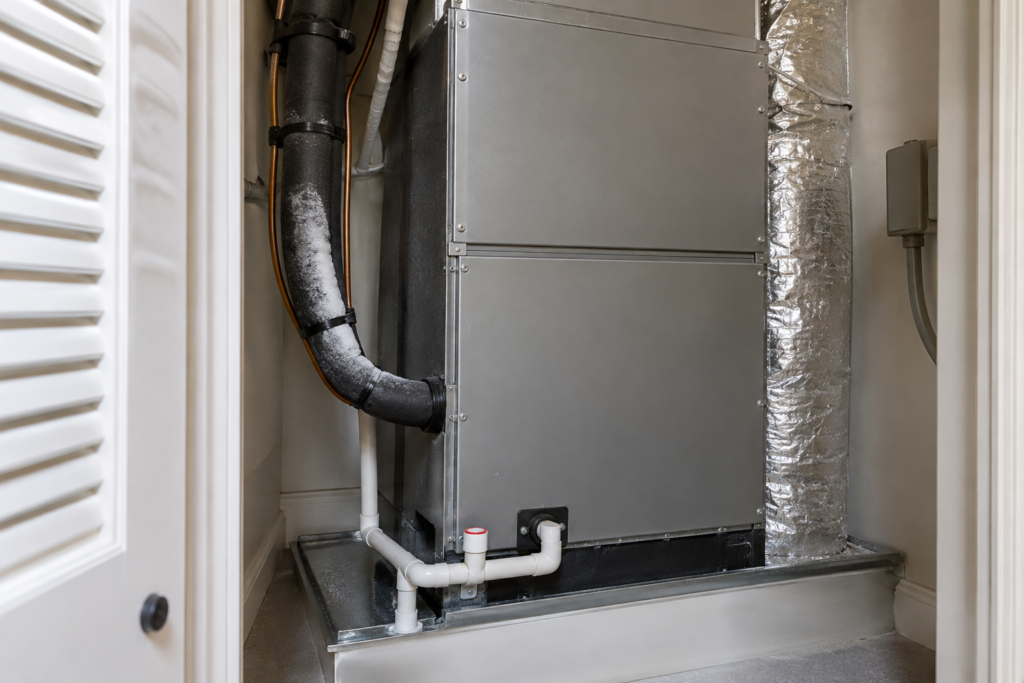
Why Is My AC Making a Buzzing Noise?
An AC buzzing noise can have several causes. Learn safe observations, when to stop cooling, and what evidence to request before an Irvine AC repair.
Explore residential air conditioning repair guidance for Irvine homeowners. Start with the Air Conditioning Repair Guides For Irvine Homeowners, then read the focused articles below.Subcategory: Cooling Problems & Diagnostics. Browse all Irvine residential HVAC guides.
An AC buzzing noise can have several causes. Learn safe observations, when to stop cooling, and what evidence to request before an Irvine AC repair.
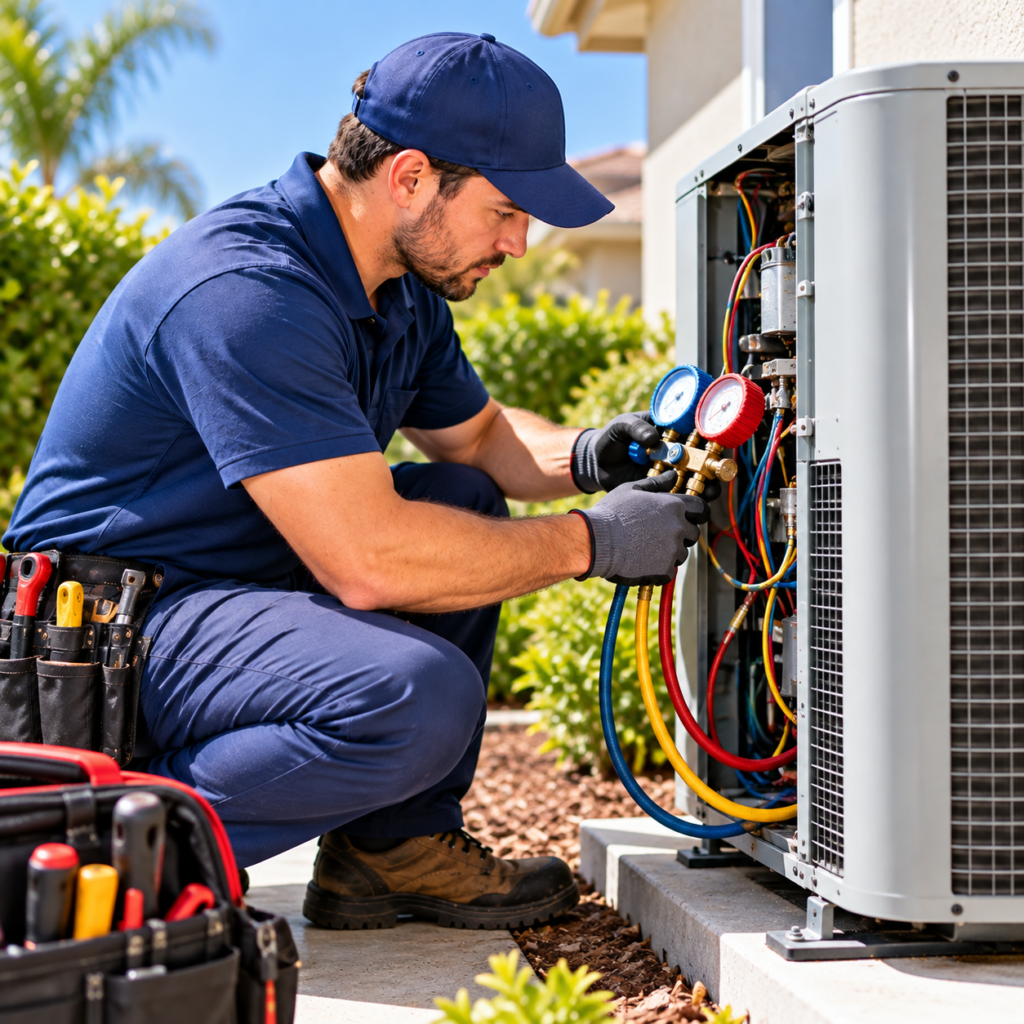
An AC grinding noise needs a source-based diagnosis. Learn safe observations, when to stop cooling, and how to review repair recommendations in Irvine.
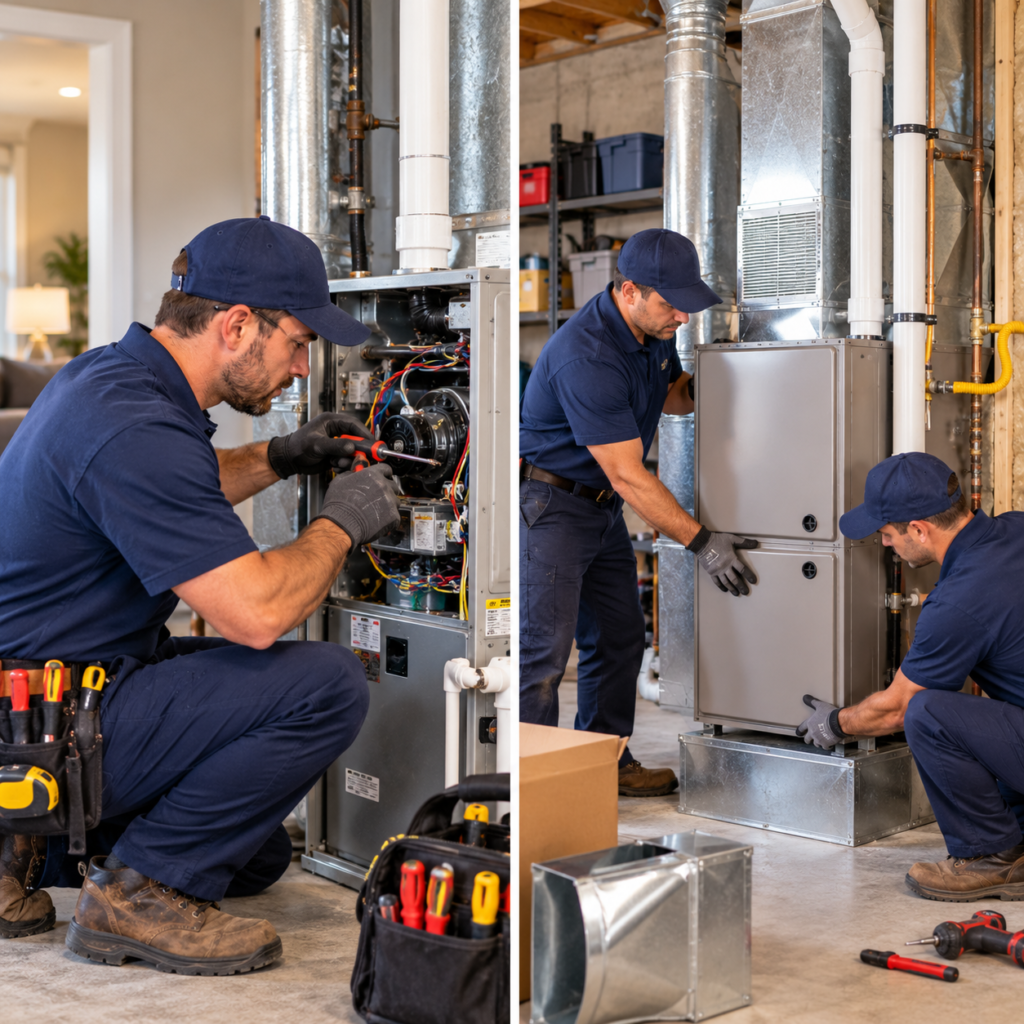
Trace a musty AC smell safely. Learn what moisture evidence to record, when to stop operation, and how to compare cleaning and repair proposals in Irvine.
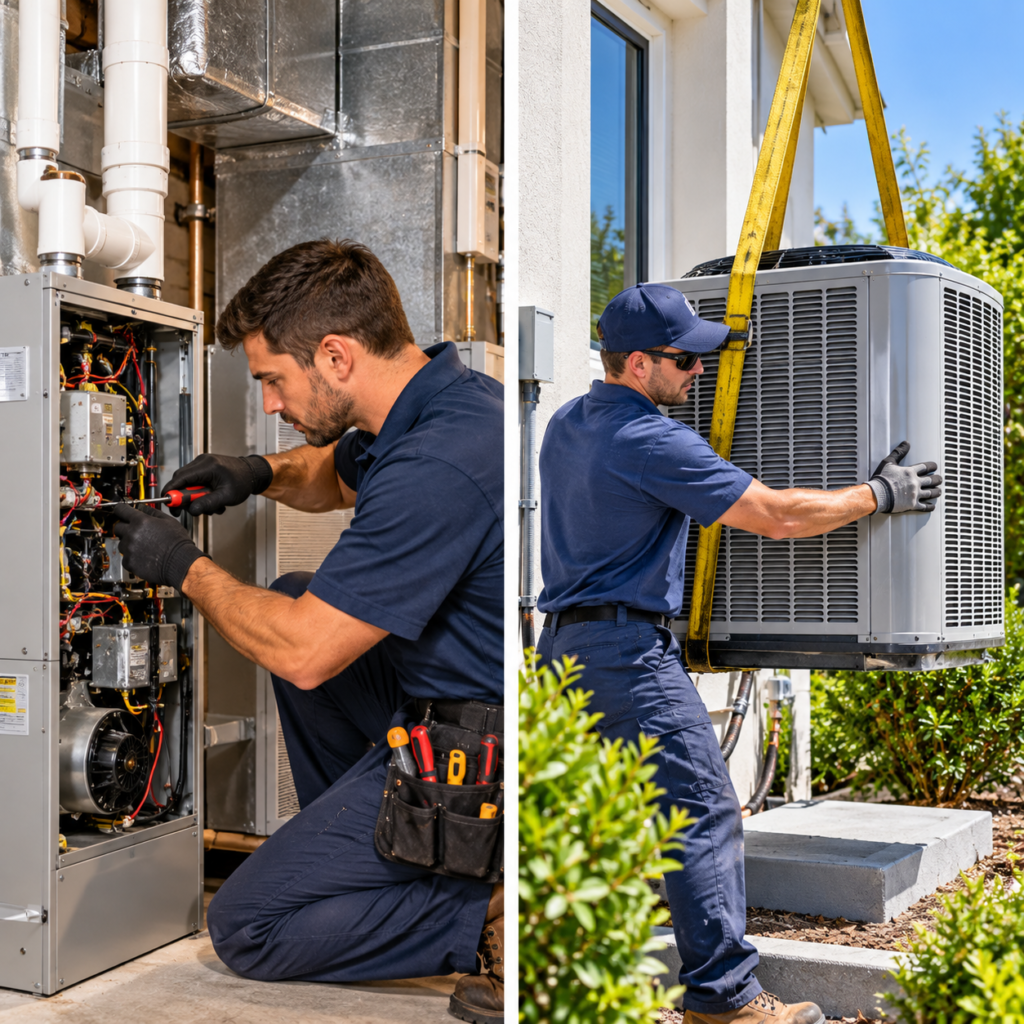
Find out why your AC misses its thermostat setting. Compare safe checks, room comfort patterns, and questions for an Irvine HVAC service visit.
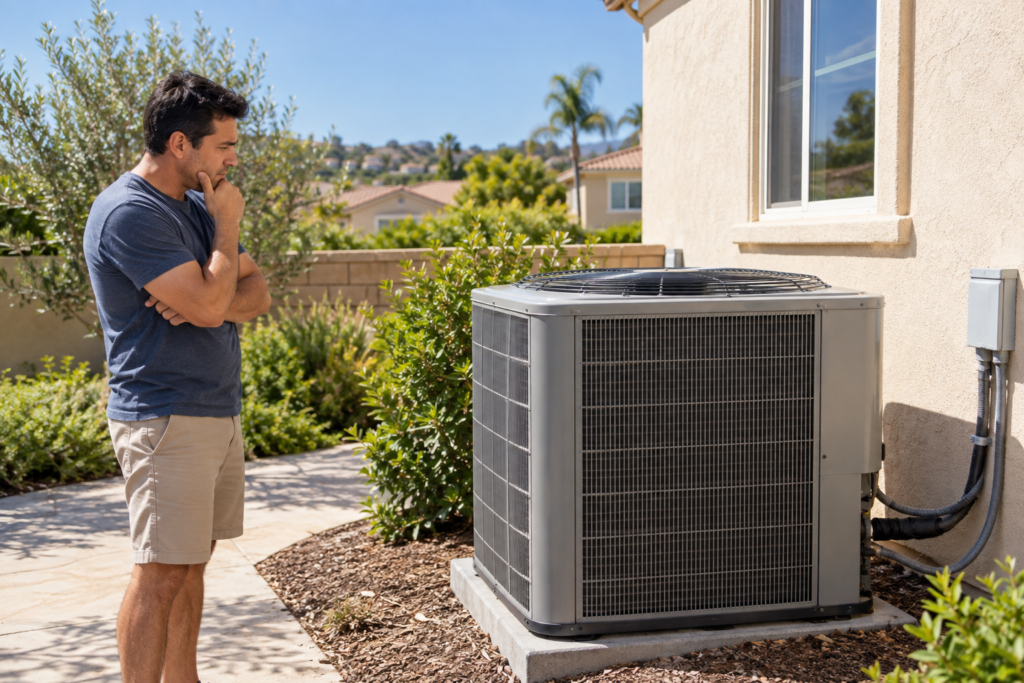
An overflowing condensate drain can involve a blockage, slope, pan, or pump. Stop cooling if water threatens the home and request a diagnosis of the full drainage path.
A puddle near an indoor AC unit can reflect condensate drainage, a pan, pump, or thawing ice. Stop for water near electricity and get a source-based diagnosis.
Long AC run times can reflect hot weather, fan settings, airflow, ducts, controls, or a cooling fault. Track set point and room temperature before assuming the unit is failing.
If the outside AC unit is not running, record thermostat, indoor blower, outdoor sounds, power, filter, and drainage clues. Leave electrical and refrigerant testing to a qualified technician.
When an Irvine air conditioner will not start, note whether the thermostat, indoor blower, or outdoor unit responds. Use safe homeowner checks and know when to stop and call a technician.
The vents move air but the rooms do not cool. Start by distinguishing fan-only airflow from active cooling. Check that the thermostat is in cooling mode with a set point below room temperature; note whether the outdoor unit runs and whether several vents feel similar.