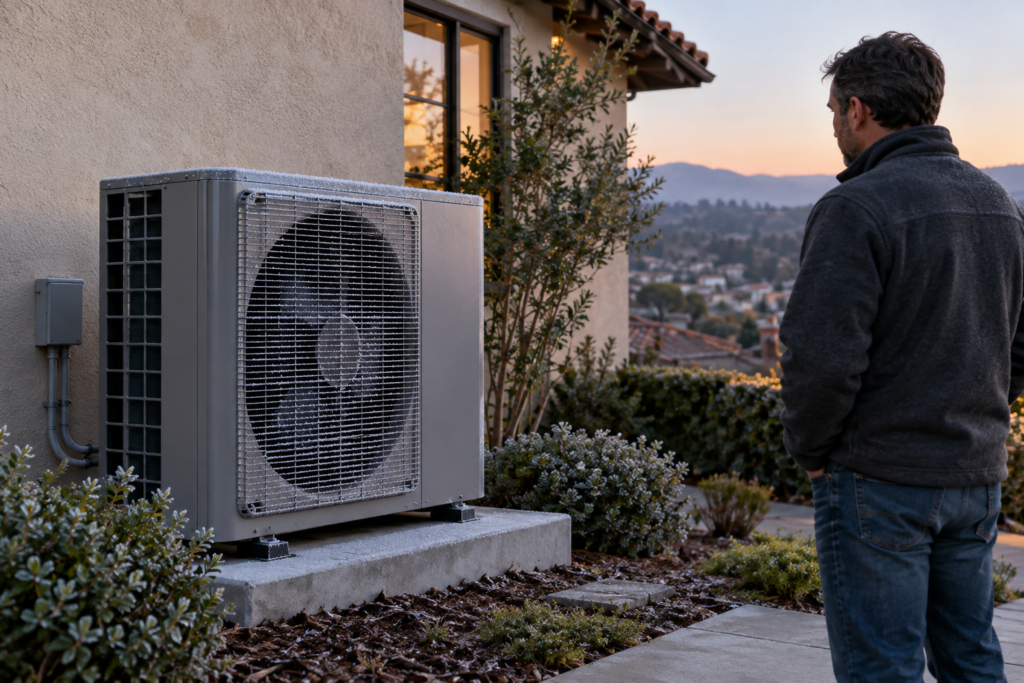
Why Isn’t My Heater Reaching the Thermostat Setting?
Learn why a heater may fall short of its thermostat setting, how to record safe observations, and what to ask an Irvine provider about comfort and repairs.
No heat, cold air, cycling, furnace noises, heat pumps, and heating safety.
Learn why a heater may fall short of its thermostat setting, how to record safe observations, and what to ask an Irvine provider about comfort and repairs.
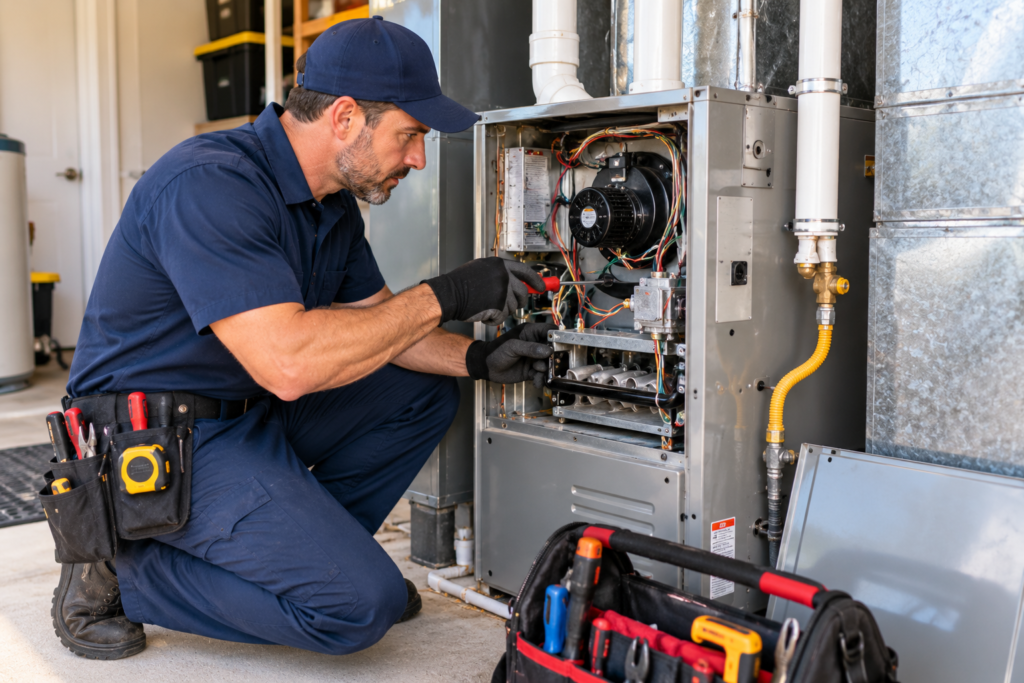
Learn why failed ignition does not prove a bad furnace ignitor, what to observe safely, and which questions to ask before an Irvine heating repair visit.
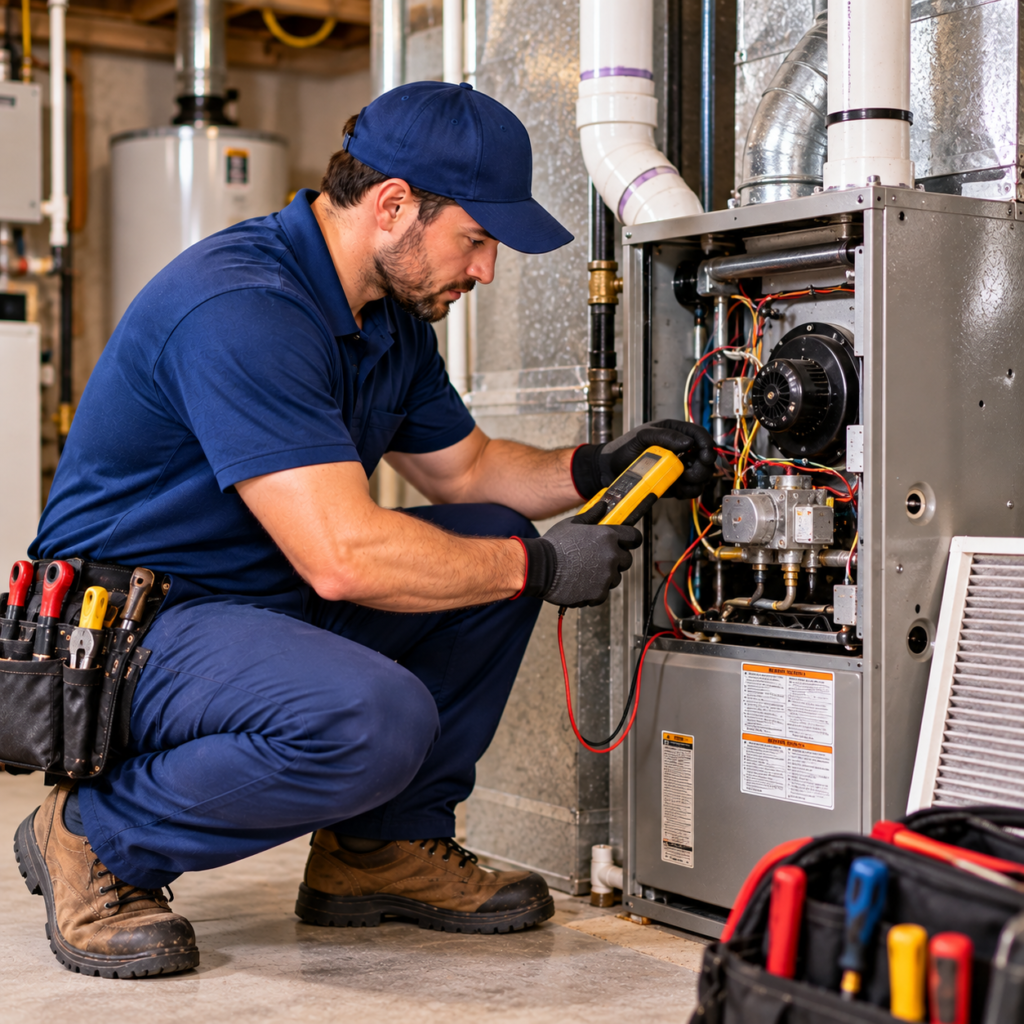
Learn what blower symptoms can mean, which observations are safe, and how to compare a documented furnace blower repair for your Irvine home’s heating system.
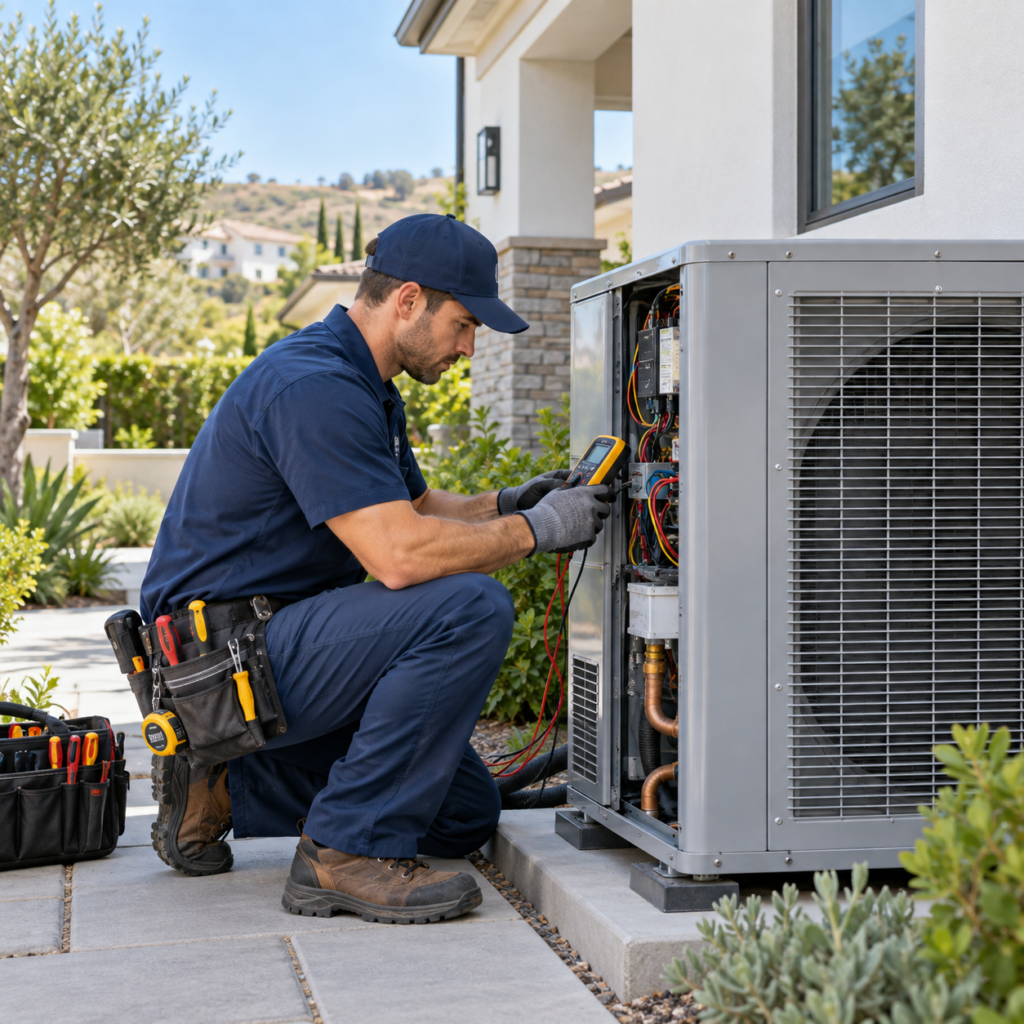
Learn how often a furnace should be serviced, what an annual visit covers, and how Irvine homeowners can coordinate filter care, records, and repair needs.
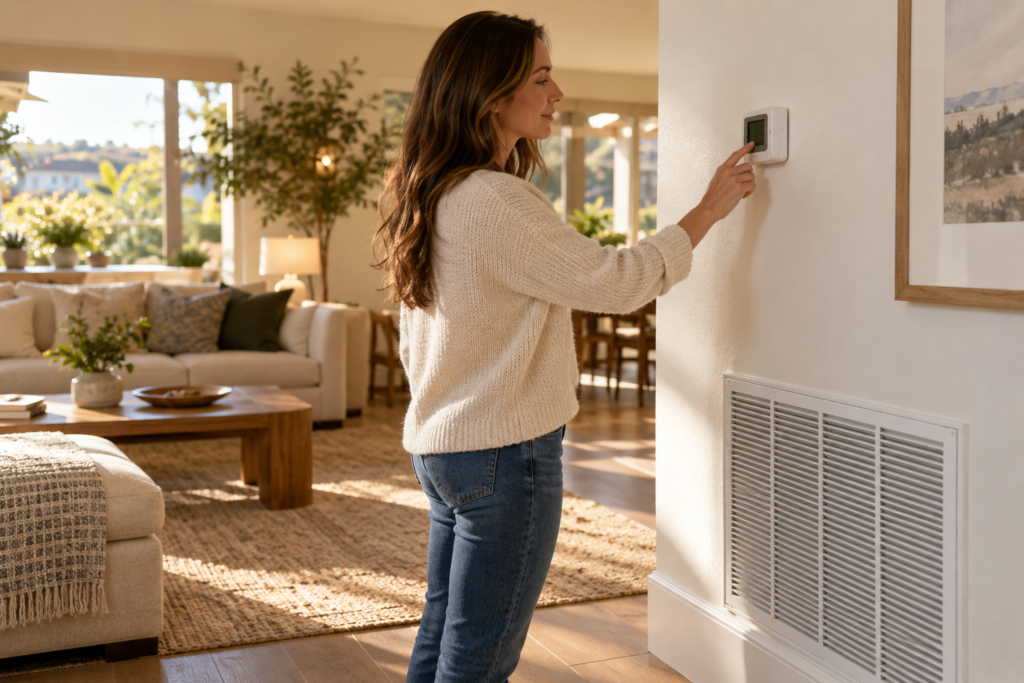
A running blower does not prove the furnace is producing enough heat. Compare room readings, airflow, and which rooms stay cold, then request measured findings.
A brief dusty first-run smell differs from persistent burning plastic, smoke, gas odor, or a CO alarm. Learn when to stop heating and how to describe the symptom.
A furnace rattle may follow blower operation or come from a panel, duct, or moving component. Record its timing and airflow pattern; stop for severe noise or safety warnings.
A furnace bang can come from ignition, duct expansion, or a blower-related issue. Note its location and timing; stop for gas odor, CO alarms, or a new sharp bang at the furnace.
A furnace no-start can involve controls, power, airflow, ignition, or a safety shutdown. Follow safe homeowner checks, recognize gas and carbon monoxide warnings, and prepare for a diagnostic visit.
Brief cooler airflow around a startup can differ from a furnace that never delivers heat. Check that the thermostat is set to heat and that the fan is not forced to ON; record whether the burner starts and how long the cool airflow lasts.